Compare the same usable facility
A modular camp price per bed is useful only when the offers describe the same accommodation and support scope. One quotation may cover sleeping modules alone, while another includes sanitary facilities, corridors, kitchens and dining buildings. Begin with a common building schedule and ask every bidder to price against it.
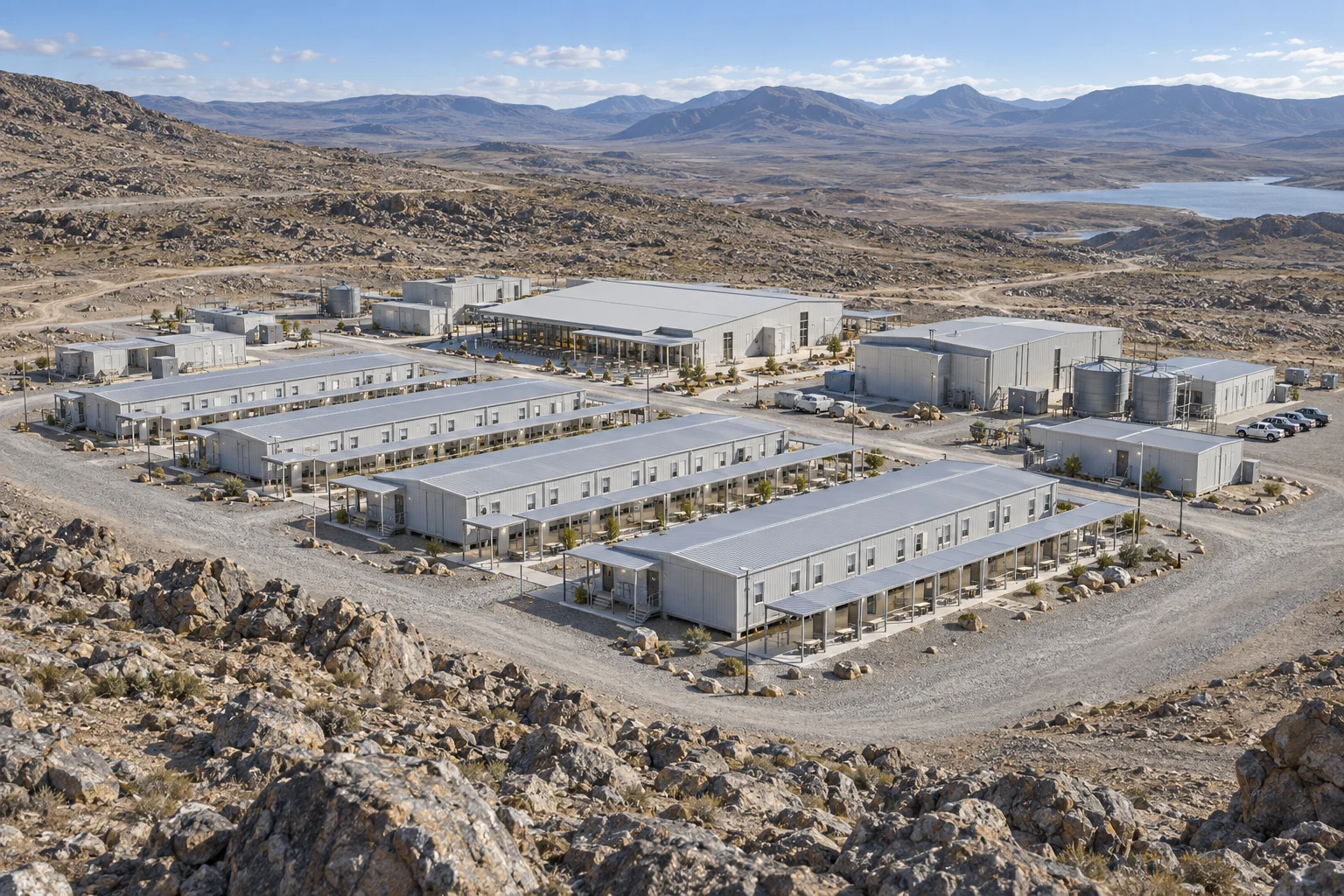
Separate shared rooms from single or ensuite accommodation. Record net room requirements, circulation, building areas and furniture. Do not use a rendered camp image to infer included quantities: the contractual room schedule and drawings should establish what is supplied.
Break the quotation into four cost groups
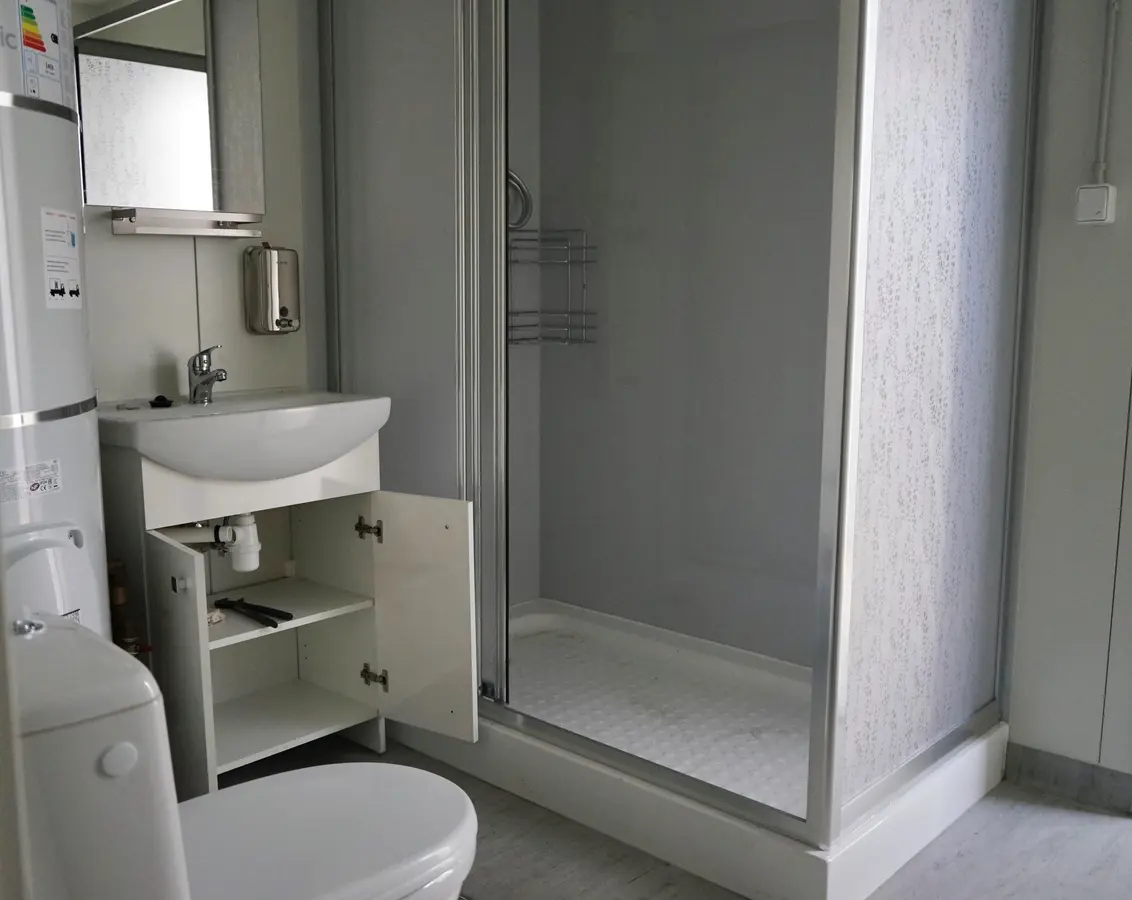
Use distinct headings for buildings, fit-out and equipment, delivery and installation, and external site works. Under buildings, list frames, envelope, internal finishes, doors and windows. Under fit-out, identify furniture, sanitary fixtures, kitchen equipment and service installations. This exposes omissions that can disappear inside a single total.
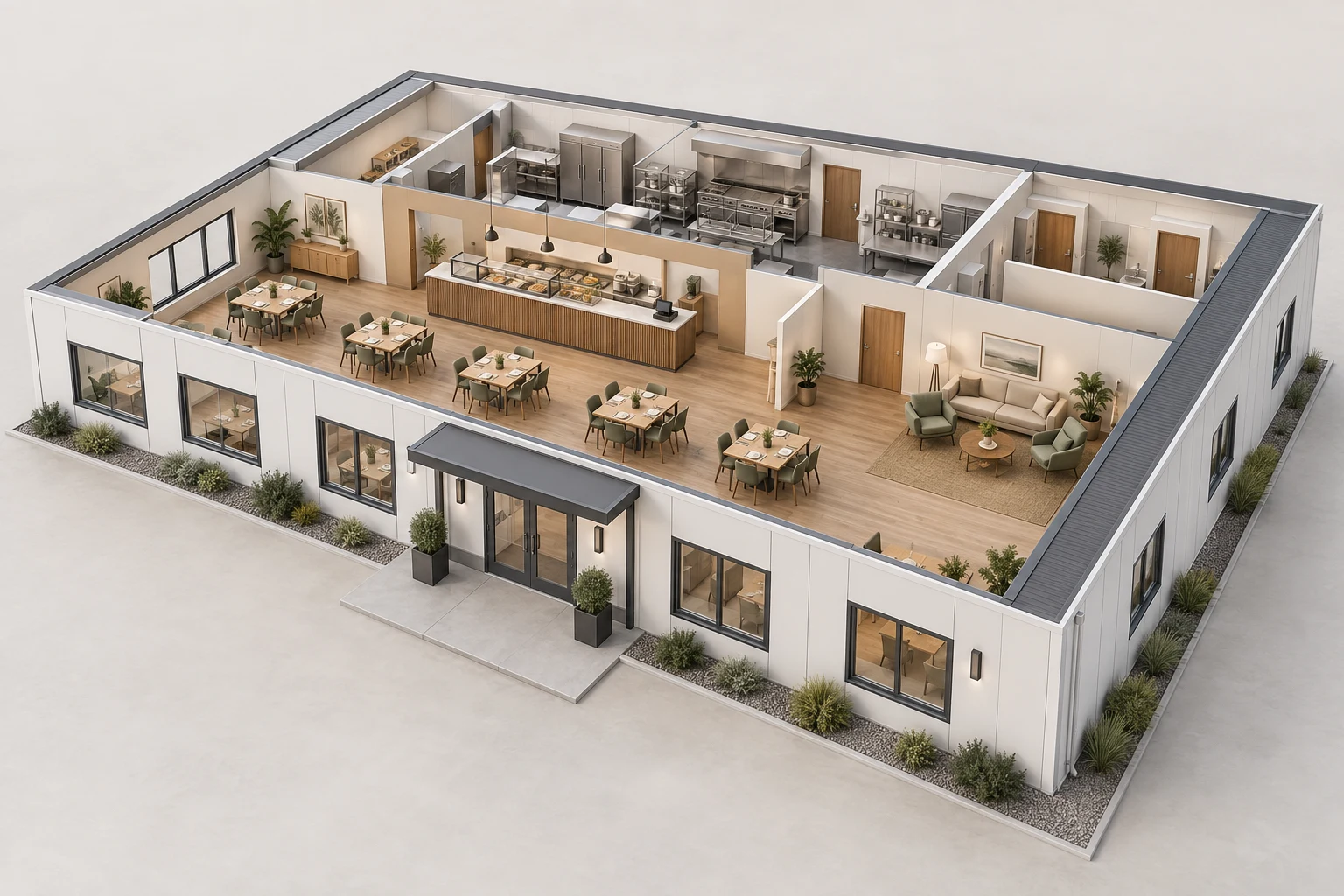
For a modular kitchen or camp dining hall, confirm the equipment boundary with the catering supplier. A building prepared for an extractor or cooking appliance does not necessarily include that equipment. Likewise, a recreation building may be an enclosed space without furniture or fitness equipment unless these are scheduled.
- Building structures, envelope and internal finishes
- Furniture, fixtures, equipment and fitted services
- Packing, transport, unloading, installation and support
- Foundations, roads, drainage and external utilities
Evaluate the delivery format with local costs
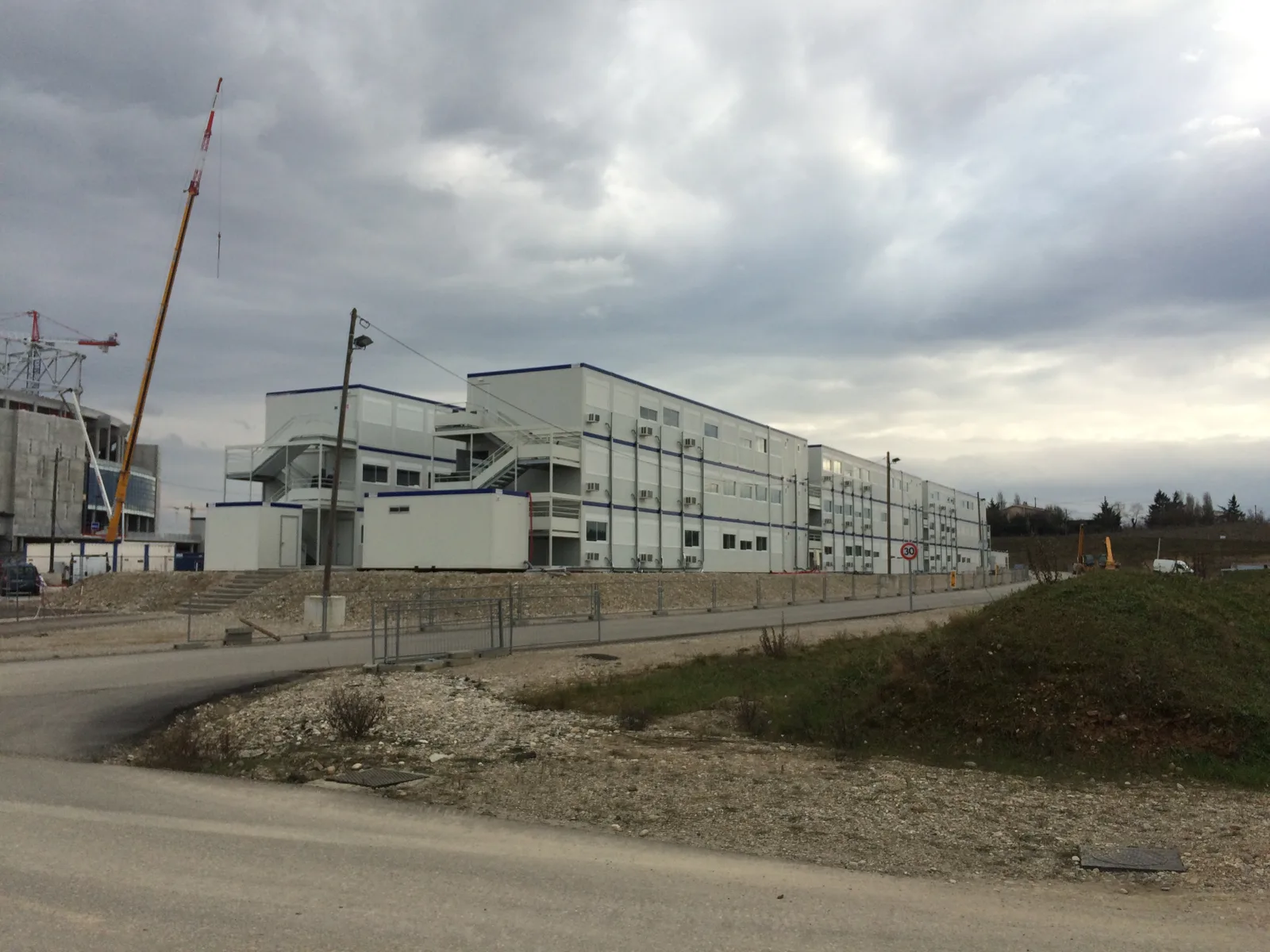
Flat-pack delivery can reduce package volume but transfers assembly work to the destination. Monoblock supply sends a more complete building and changes transport, lifting and local labour needs. Fully demountable kits may suit particular packing constraints but require a clear component-level installation plan.
Compare the proposed freight route and local installation scope together. Ask for package dimensions and weights when available, the agreed trade term, destination responsibilities and supervision assumptions. Travel and accommodation for site support, storage delays and local equipment can affect the delivered cost even when the factory price is unchanged.
Record exclusions and compare each phase
Keep an exclusions list next to the price comparison. Assign a responsible party to each item and show whether it is separately priced, provided locally or still undecided. Unresolved scope should remain visible rather than be treated as a zero-cost inclusion.
For a phased camp, request prices and milestones for each usable stage. Check whether early accommodation can operate with the planned catering and sanitary capacity, and whether later expansion needs additional utility works. Send the location, room mix, building schedule and opening dates to request a project-specific quotation. There is no single reliable camp price that applies to every destination and specification.
This guide supports early procurement planning. It is not a quotation, construction specification or confirmation of local compliance. Final design and supply scope require project-specific review.